
Seller guide
Decommissioning and Rigging Switchgear
The removal is usually the part sellers dread. Here is what it involves and why it should not be your cost.
- Paid before pickup
- No testing required
- Freight and rigging covered
- Any amperage, any condition
Request a Quote
Have gear to sell while you read? Send a nameplate photo for a same-day number.
Disconnection comes first, and it is the long pole
Nothing can be touched until the gear is de-energised, locked out and verified. Depending on where your lineup sits in the system, that means either a utility disconnect, a plant shutdown, or a licensed electrician isolating the feeders upstream. On medium voltage gear it also means grounding.
This step belongs to the site rather than the buyer, because it involves your electrical system and your safety procedures. It is also the step that determines the schedule, so it is worth starting the conversation with your electrician or utility before you have even accepted an offer.
Section separation
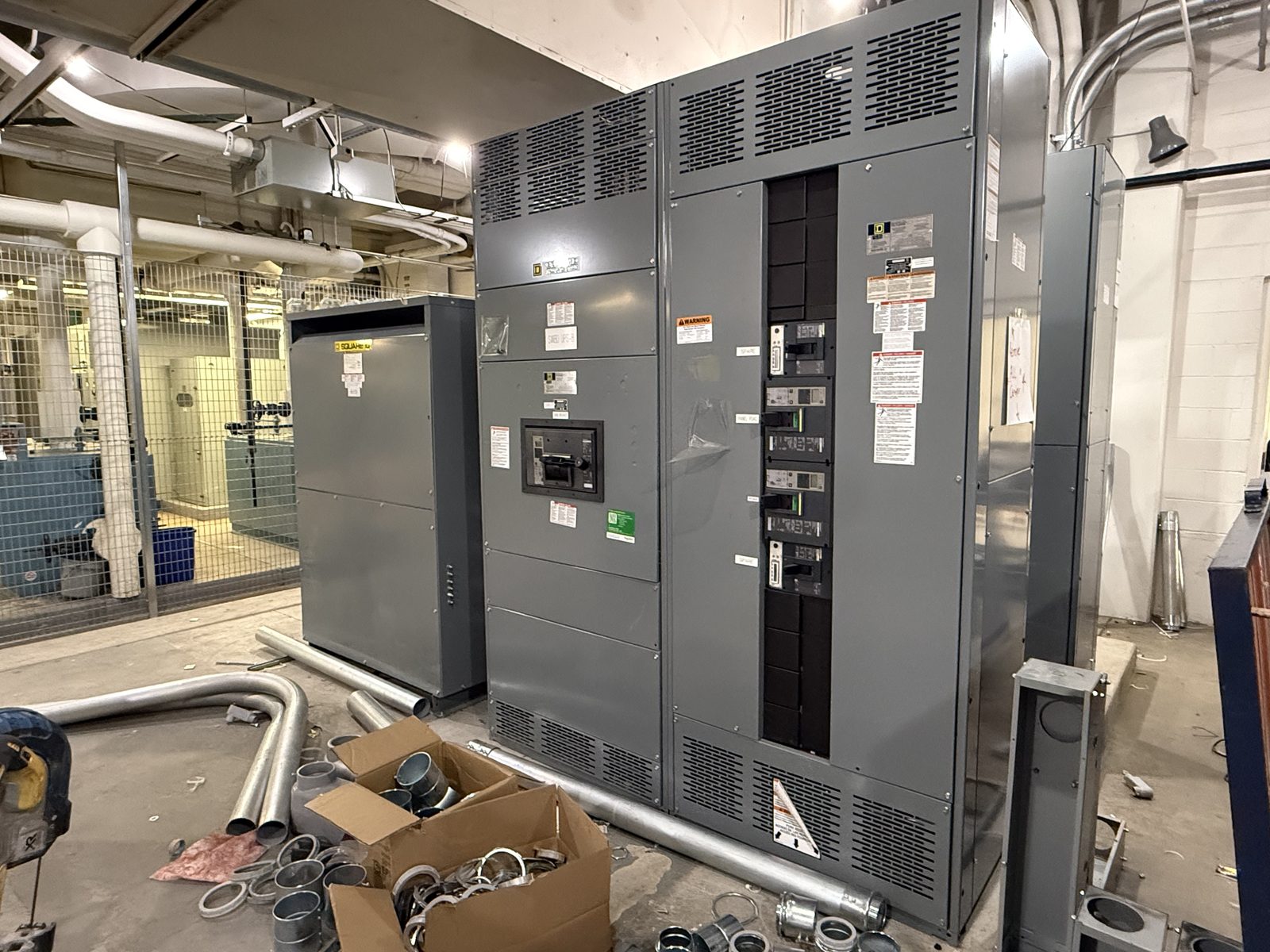
A switchgear lineup arrives at a building as separate sections bolted together, with the bus splices made in the field. It leaves the same way. Separating sections means removing the splice plates, disconnecting the control wiring between sections and unbolting the frames from each other and from the floor.
Done carefully, this preserves the resale value of every section. Done carelessly, with a torch and a hurry, it converts the lineup into scrap. This is the main reason we do our own teardown rather than accepting gear that somebody else has already pulled apart.
Rigging out of the room
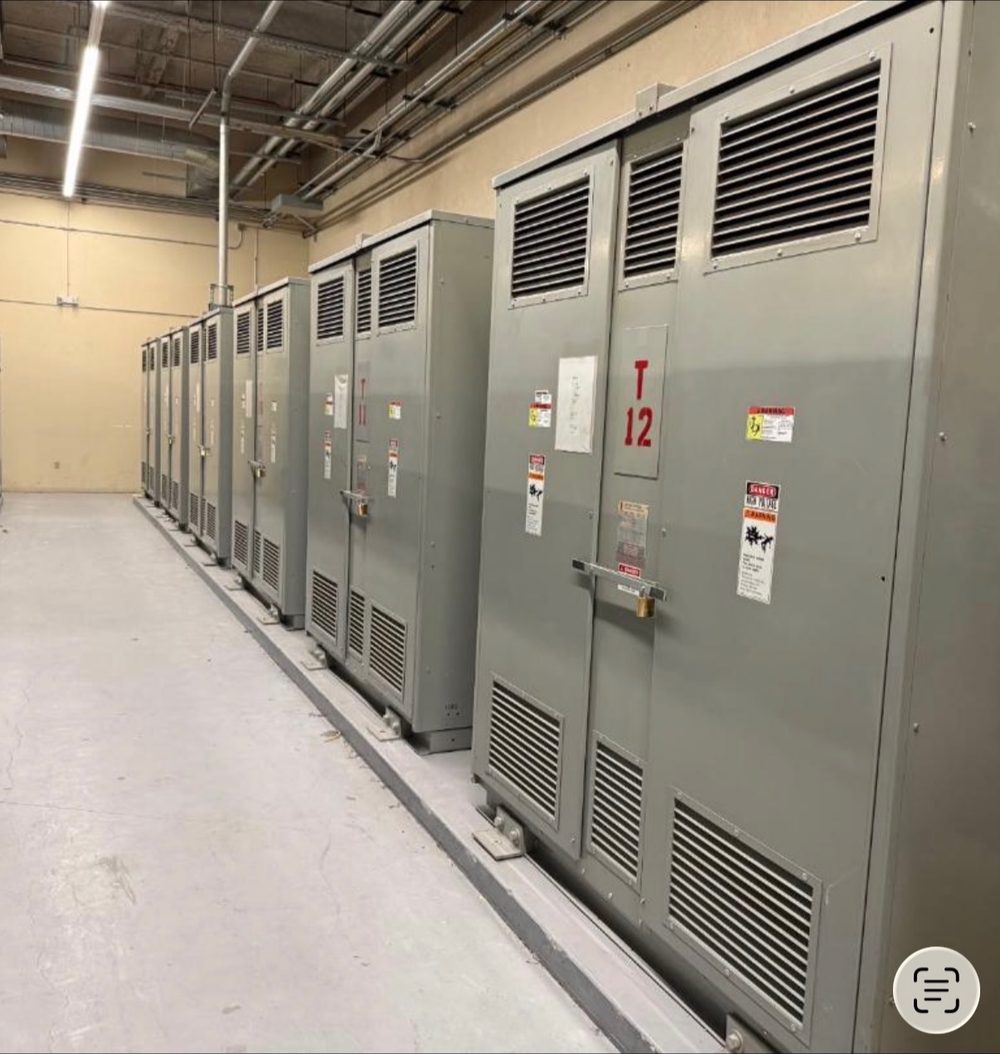
Individual sections commonly weigh between several hundred and several thousand pounds. Getting them out involves some combination of pallet jacks, machine skates, gantries, telehandlers and cranes, chosen from what the room and the path allow. Door widths, floor loading, ramp grades, elevator capacity and overhead clearance all constrain the plan.
This is why we ask for a photo of the room and the path to the dock at quoting time. A plan built on accurate information produces an offer that does not change when the crew arrives.
Freight
Low voltage sections generally move on standard flatbeds or in dry vans. Tall medium voltage sections and outdoor switchhouses may need step-deck trailers, and occasionally permits or escorts. Loads are strapped and cribbed so that sections do not rack in transit, because a section that arrives twisted is worth less than one that arrives square.
We stage regionally and consolidate loads, which is how we absorb freight without it changing your number.
Who pays for what
On our purchases: teardown, section separation, rigging, cribbing, loading, freight and any permits are our cost, and they are already reflected in the offer you receive. The site is responsible for the electrical disconnection and for providing access.
If somebody quotes you a higher number but expects you to deliver the gear to a dock, compare the two carefully. Rigging and freight on a large lineup can exceed the difference between the two offers.
Request a Quote
Send a nameplate photo for a same-day number.
More seller guides
Everything we know about selling switchgear
Classes of switchgear we buy
Distribution equipment only
Low Voltage Switchgear
600V class drawout and fixed-mounted lineups pulled from indoor electrical rooms.
Medium Voltage Switchgear
5kV and 15kV class metal-clad lineups with vacuum or air breakers, indoor and outdoor.
Switchboards
Front-accessible service entrance and distribution switchboards from commercial buildings.
Unit Substations
Close-coupled primary, transformer and secondary assemblies from industrial plants.
Motor Control Centers
MCC lineups with starter buckets, VFDs and combination starters from plants and utilities.
Circuit Breakers
Loose air, vacuum, insulated case and molded case breakers, individually or by the pallet.
Panelboards
Distribution and branch panelboards, loadcenters and column panels in bulk lots.
Outdoor Switchgear
Walk-in and non-walk-in weatherproof enclosures, pad-mounted and skid-mounted lineups.
Arc-Resistant Switchgear
Type 2B arc-resistant lineups with plenums and pressure relief, low and medium voltage.
Metal-Clad Switchgear
Compartmentalized drawout medium voltage gear with grounded metal barriers between sections.
Bus Plugs and Busway
Plug-in and feeder busway runs, elbows, tees and bus plugs from industrial ceilings.
Switchgear Scrap
Burned, gutted, flooded and unrepairable gear bought for copper and metal content.
Questions we get asked
Straight answers
Do I need to hire a rigger before selling?
No. Hiring a rigger yourself usually costs you more than it adds to any offer. We bring our own crew and equipment.
Can you work around an operating facility?
Yes. Most of what we remove comes out of buildings that are still occupied or plants that are still running. We work to your access hours and your lockout procedure.
What if the gear is in a basement with no dock?
That is common and it is a solvable problem. Send photos of the room and the path out, and the rigging plan will account for it.
Questions about your gear?
Call or text a nameplate photo. No obligation.
Request Your Quote
Nationwide, upfront payment, freight covered.